
O.O. Omotowa
School of Nursing, Idaho State University, Idaho Falls, ID USA 83402
Corresponding Author: Omotayo O. Omotowa, 1784 Science Center Drive, Idaho Falls, ID 83402, Phone: 208-282-1117, Email: omotomot@isu.edu, Fax: 208 282 7966
Abstract
BACKGROUND: In the United States, older adults’ population, including those residing in nursing homes, continues to grow, thereby necessitating increase nursing care services by licensed nurses. However, staffing of licensed nurses in nursing homes continues to be inadequate, causing older adult residents to experience staffing related quality of care deficiencies. Researchers have reported that nurse staffing levels are associated with quality of care in for-profit and not-for profit nursing homes, but studies that focused on for-profit and not-profit religious-based nursing homes are rare.
OBJECTIVE: To determine and compare the prevalence of staffing related quality deficiencies and their relationships with nurse staffing levels in for-profit and not-for-profit religious-based nursing homes.
DESIGN/SETTING/PARTICIPANTS: Using cross-sectional design, secondary data were collected from the CMS’ Nursing Home Compare (now Care Compare) on 11,022 nursing homes. Variables of measure included registered and licensed nurses’ hours per resident day and quality of care deficiency F353 and F354 and analyzed using SPSS.
RESULTS: The licensed nurses’ mean hours per resident day were more than double that of the registered nurses in for-profit nursing homes compared to the not-for-profit religious-based nursing homes. Insignificant association between nurse staffing levels and deficiency scores and insignificant scores of F353 severity were observed in the not-for-profit religious-based nursing homes; while occurrences of F353/F354 deficiencies were not as prevalent compared to the for-profit nursing homes.
CONCLUSION/CLINICAL/RELEVANCE: Staffing related quality deficiencies adversely affect older adults’ quality of life. The higher prevalence and severity of these deficiencies in the nation’s largest number of nursing homes is detrimental and affects the well-being of a larger number of older adults. Adequate and appropriate registered and licensed nurses’ staffing, and their enforcement, would promote and enhance quality of life among this population.
Key words: Nursing homes, older adults, nurse staffing, quality care, deficiencies.
Introduction
In the United States, the older adult population continues to grow in number. Whether they live in their homes, nursing homes, or long-term care facilities, older adults deserve quality of health care provision, quality of life, dignity, and maintenance of their physical, mental, and psychosocial well-being. Unfortunately, more than 1.4 million of this frail and vulnerable population residing and receiving their care services in nursing homes continue to experience neglect, less than optimal care outcomes of various measures, and staffing related quality deficiencies due to inadequate and inappropriate staffing levels (1-5). In response, the United States Federal government and the Centers for Medicare and Medicaid Services (CMS) promulgated laws and took steps through policy and regulations to address issues of care services and quality outcomes for older adults in nursing homes. In 1987, the Federal government, through the Nursing Home Reform Act, mandated nursing homes to have specified minimum nurse staffing levels on duty for 24/7 resident care (6). In spite of these efforts, nursing homes continue to operate with insufficient and inappropriate nurse staffing levels, leading to deficiencies in care outcomes and jeopardizing the quality and safety of older adult nursing home residents. This situation is worse in for-profit nursing homes compared to not-for-profit facilities (7, 8).
Nursing homes have an annual onsite comprehensive health and recertification inspection conducted by a team of state surveyors to assess nursing homes’ practices, policies, and compliance with federal requirements (9). In addition, the inspectors evaluate quality deficiencies and provide reports on quality and performance to the residents, their families, and the public (7, 9, 10). The assessment focuses on areas that include resident rights, quality of life, medication management, skin care, resident assessment, nursing home administration, environment, and kitchen/food services. Inspection outcomes are rated and cited, as necessary, for failure to comply with federal regulations and poor performance on quality indicators (8, 11, 12). The ratings and citations are based on the number, scope, and severity of deficiencies identified during the two (previously three) most recent annual inspection and 36 months of complaint investigations, including repeat revisits to ensure deficiencies’ correction (9, 10). Tagged and named by the specific standard violated, the scope of ensuing quality deficiency citations is measured by how many residents are affected; severity, the extent of harm caused by violation(s), are rated from “A” – “L” with categories “G” through “L” being the most severe deficiencies (9, 13-15). The CMS issues F353 when deficiency is related to inadequate nurse staffing levels and F354 when specific staff coverage requirements and qualifications are inadequate, higher deficiency score is an indication of increase seriousness and widespread of the quality violations (9).
Focusing on diverse nursing home quality indicators, researchers have measured quality care deficiencies using different approaches that include number counts, severity, total number of scores, and dichotomizing scores into percentiles. Total deficiencies, quality of care, and quality of life indicators of nursing homes’ quality performance directly depend on nurse staffing level, hence, the implications of staffing related deficiency citations are significant for NH residents’ quality of care and life (8, 12). Older adults do not receive quality care and safety benefits when there are inadequate and inappropriate levels and skill-mix of nurse staffing, especially registered nurses’ levels which had been reported to have negative relationships with care outcomes, including total health and severe deficiencies (4, 5, 16-21). Similarly, researchers have reported negative relationships between licensed practical/vocational nurse (LPN/LVN) staffing levels and quality, total, and severity of deficiencies (15, 22). Exception to the LPN/LVN staffing levels and deficiencies outcomes were observed by researchers who found positive relationships between LPNs and deficiency citations and increased LPN skill-mix and total/quality of care deficiencies (14, 17). Another study reported that reduced licensed nurses (LN) level, skill-mix, and turnover were significantly related to total, quality of care, and increased deficiencies (11). Compared to the not-for-profit (NFP) nursing homes (NHs), researchers showed that for-profit NHs had inadequate registered nurse staffing levels, insufficient total nursing hours per resident day, more quality deficiency citations, and poorer care outcomes (7, 18). Another report showed that most of the nursing homes who were at or below 2.79 total hours per resident day (HPRD) in the second quarter of 2022 were the for-profit nursing homes (20).
Although researchers have shown that adequate and appropriate staffing levels of nurses are important for quality care delivery and outcomes for older adults nursing home residents, studies that examined and compared the relationship between registered and licensed nurse staffing levels and staffing related deficiencies in for-profit and not for-profit religious-based nursing homes were very rare. Most studies have focused on the for-profit and not-for-profit categories of nursing homes. It was important to examine staffing-related quality deficiencies occurring in these nursing homes for care services improvement and policy changes that have the potential of maintaining the physical, mental, and psychosocial well-being of older adults. This study intended to fill the gap in the literature by comparatively examining the differences in adherence to registered and licensed nurse staffing levels and their effects on residents’ staffing related deficiencies in these two nursing home types. We hypothesized that there was a difference in registered and licensed nurse staffing levels and occurrences of staffing related quality deficiencies between for-profit and not for-profit religious-based nursing homes.
Methods
Design
A retrospective, correlational, cross-sectional design was used for this study. Secondary and publicly published information on nursing homes’ staffing, providers, and surveys of residents’ health was accessed from the Nursing Home Compare on the CMS’s websites. The information was from nursing homes’ performance reports that were collected by the government agency and validated for reliability. The information can be accessed at https://data.medicare.gov/. An approval was granted by the Institutional Review Board, albeit the study was not subjected to review.
Variables
The independent variables of measure included two types of nursing homes; for-profit and not-for-profit religious-based, and nurse staffing levels, with a focus on registered nurses (RNs) and licensed nurses (LNs). The dependent variable was staffing related quality deficiencies, measured by deficiency citations. The for-profit nursing homes are profit making organizations with the expectation to benefit their shareholders (23) while the not-for-profit religious-based nursing homes, a specific type of not-for-profit nursing homes, do not have defined shareholders and are not subject to the pressure of distributing profits. In addition to providing standard of care to residents, the not-for-profit religious-based nursing homes provide spiritual support, religious activities, value-based services, and evaluate their performance by how well they provide services and meet their clients’ needs (24, 25). However, unlike all not-for-profit NHs, their ownership and funding are tied to a specific church or religious group. The two nursing home ownership types were derived from the CMS’s Nursing Home Compare report data.
In the United States, RNs have the highest nursing education, at both baccalaureate and associate degrees levels, and legal authority, knowledge, and skills to conduct patients’ assessment, draw conclusions about nursing diagnoses, perform appropriate and individualized care plan and interventions to avoid adverse events. The LPNs and LVNs have lesser educational attainment and training than RNs; their responsibilities include working with RNs to implement, supervise, and evaluate care. Licensed nurses comprise RNs and LPNs/LVNs. Nurse staffing levels were defined as 0.75 registered nurses and 1.30 licensed nurses’ HPRD recommended for prevention of serious harm and jeopardy to residents by the CMS in 2001 (26). The study did not use the current proposed staffing regulations that set the RN level at a lower HPRD and does not propose minimum HPRD for LPNs (20).
The staffing related quality deficiencies were measured by the total number of occurrences and scope/severity deficiency citations categories F353 and F354. F353 is issued when there are inadequate nurse staffing levels to provide care that maximizes the well-being of the residents while F354 is issued when specific staff coverage and qualification requirements are unmet (27). The total citation number and the most severe and worst levels J, K, and L deficiency citations were used as measuring indicators.
Data Collection
Published secondary information on nursing homes’ staffing, provider types, ownership types, and staffing related deficiency citations were collected from the CMS’s Nursing Home Compare Certification and Survey Provider Enhanced Reporting (CASPER) report. The report was accessed at https://data.medicare.gov/ and https://www.cms.gov/research-statistics-data-and-systems/downloadable-public-use-files/cost-reports/. All operating Medicare and Medicaid certified nursing homes that were non-governmental and non-hospital based constituted the study sample. Nursing homes that were newly certified in 2016 and 2017 were not included in the study. Datasets were collected for quarters two, three, and four in 2016 and quarter one in 2017 survey cycles of nursing home inspection. Information collected has been processed and validated for reliability by the record keepers. The sample size of 11,022 nursing homes had sufficient statistical power at 0.80 and 0.05 alpha.
Statistical Analysis
Nursing homes listed as actively operating during quarters two, three, and four in 2016 and quarter one in 2017 inspection cycles were matched with variables of interest to address the study hypotheses. Statistical tests used included descriptive and inferential tests, crosstab, and Mann-Whitney U. The use of non-parametric test was related to the abnormal normality of continuous variables. Analyses were conducted using the Statistical Package for the Social Sciences (SPSS). The p value for statistical tests was set at 0.05.
Results
In examining the differences in nurse staffing levels in these two nursing home types, a descriptive and Mann-Whitney U analyses of nurses’ HPRD were conducted. Analysis, shown in Table 1, revealed a mean LN HPRD that was more than double the mean RN HPRD for FP NHs while the mean RN HPRD was about 54% of the mean LN HPRD in not-for-profit religious-based NHs. There were higher average hours for both RN and LN in the NFPRB nursing homes compared to FP nursing homes. In each category of nursing homes, the minimum and maximum hours were generally lower for RN than LN. However, the minimum staffing levels were lower in FPs compared to NFPRB NHs while the reverse was observed for the maximum levels. Mann-Whitney U analysis of these measures (table not included) also revealed higher means of the ranked variables for the NFPRB NHs in the areas on RN and LN staffing levels than their FP counterpart. Compared to the NFPRB NHs, higher number of FP NHs did not meet staffing levels for RN and LN.
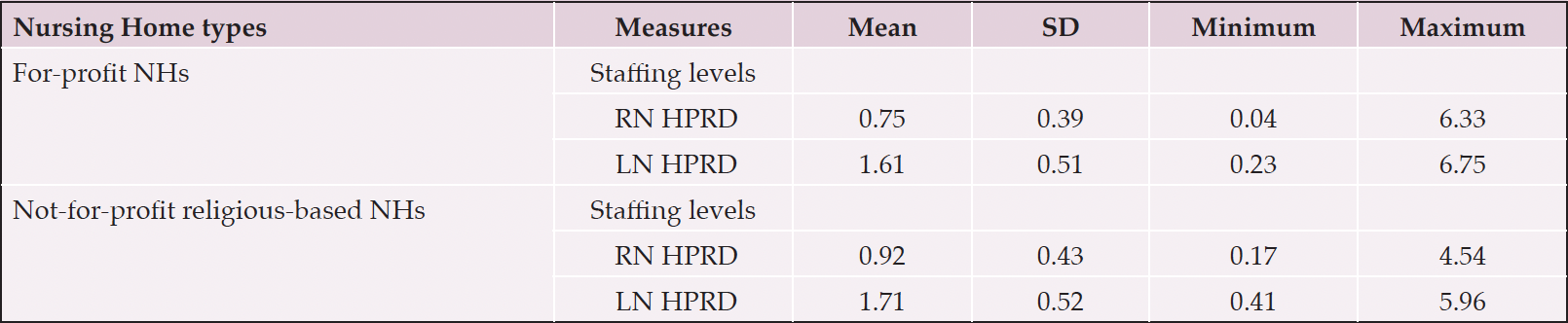
Table 1. Descriptive Statistics for the Continuous Variables: RN and LN Staffing Levels (HPRD) by Nursing Home Types
Note. RN = Registered Nurse, LN = Licensed Nurse, HPRD = Hours Per Resident Day.
In Tables 2 through 4, the relationship between staffing levels and F353/F354 deficiency citation counts and F353 severity levels were examined using Crosstabs/Chi-square and Fisher’s Exact tests. Findings showed that association between nurse staffing levels and deficiencies in the not-for-profit religious-based NHs was not significant. The not-for-profit religious-based NHs had an insignificant number of severe deficiency levels J, K, and L for F353. In the for-profit NHs, results were statistically significant for RN staffing and F354 deficiency counts and LN staffing and both F353 and F354 deficiency counts. The relationship between RN staffing and F353 deficiency counts and between RN/LN staffing and F353 severity levels were insignificant.
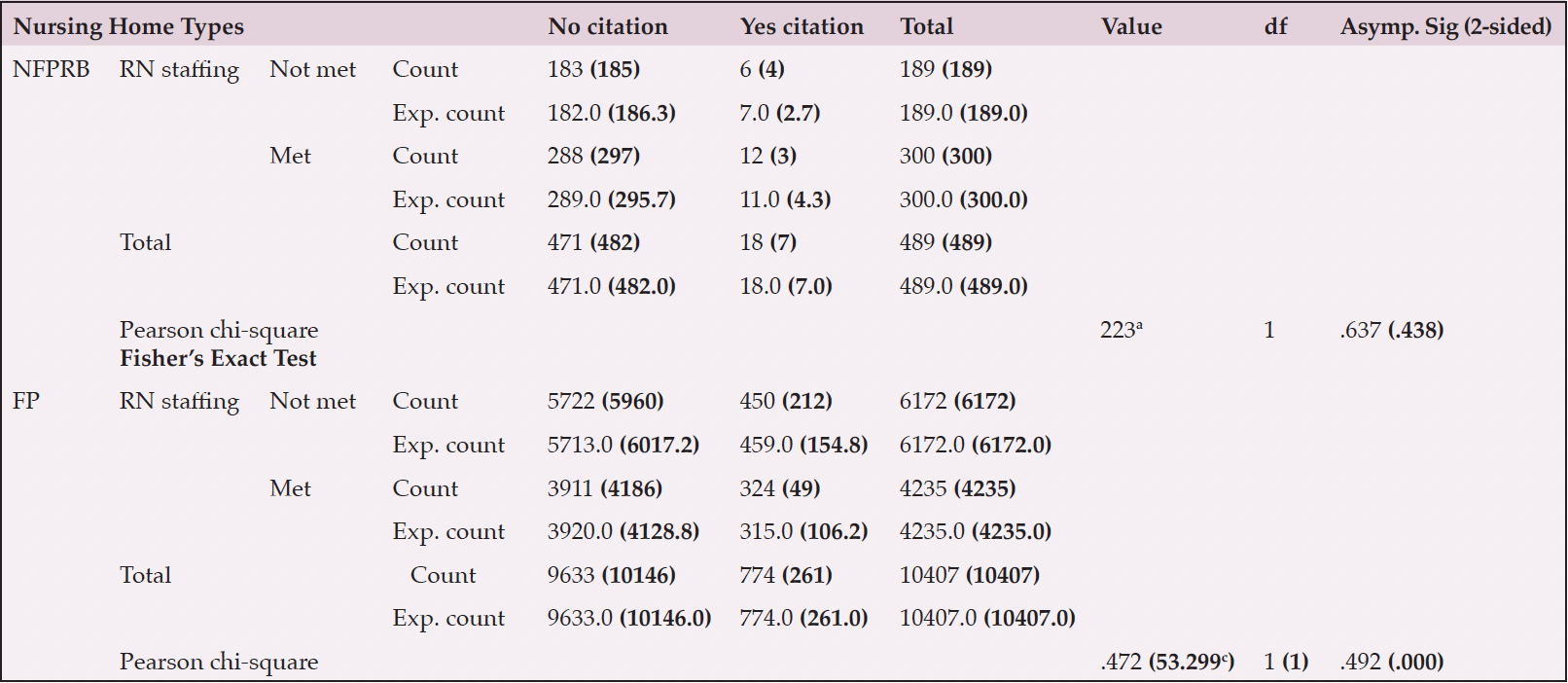
Table 2. Crosstabs: Relationship between RN Staffing levels and F353 and (F354) Deficiency Counts
RN staffing levels and F354 deficiency count values are in bold. Fisher’s Exact Test used for RN staffing levels and F354 deficiency count in NFPRB NHs.
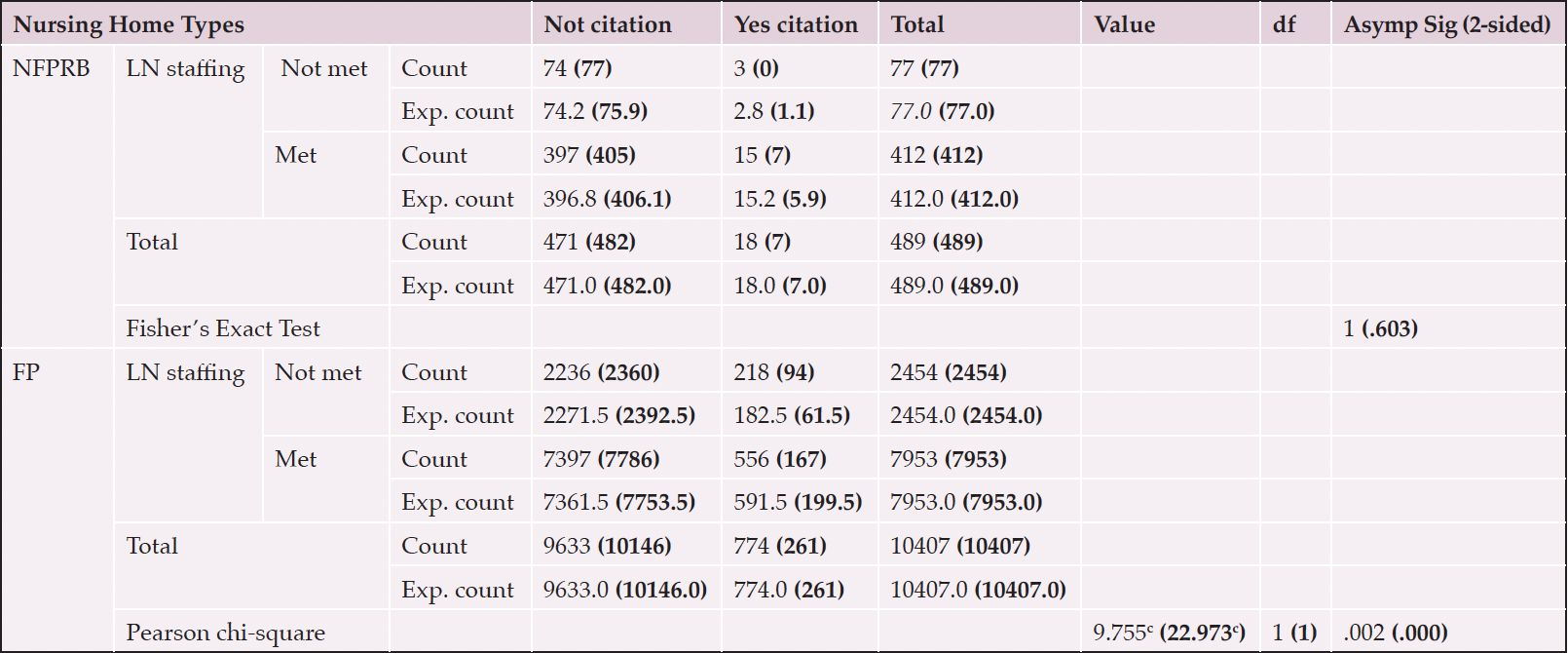
Table 3. Crosstab: Relationship between LN Staffing levels and F353 and (F354) Deficiency Counts
RN staffing levels and F354 deficiency count values are in bold. Fisher’s Exact Test used for RN staffing levels and F354 deficiency count in NFPRB NHs.

Table 4. Crosstab: Relationship between RN and (LN) Staffing Levels and F353 Deficiency Severity
Note. a : No record for F353 severity among the NFPRB NHs. LN staffing levels and F353 severity values are in bold.
Differences in the occurrences of staffing related quality deficiencies (F353 and F354 citations; F353 deficiency severity) were reported in Table 5. A lower number of deficiency citation counts for F353 and F354 were observed in the not-for-profit religious-based NHs than the FP NHs. Staffing deficiency severity, F353, was observed among the for-profit NHs, none was observed for the NFPRB NHs. Chi-square was statistically significant for F353 deficiency citation counts but not significant for the remaining staffing related deficiency categories at X2(1, N = 11022) = 9.276, p = .002 (F353 citations), X2(1, N = 11022) = 2.599, p = .110 (F354 citations), and X2(1, N = 11022) = 1.278, p = .258 (F353 severity). While scores for staffing related deficiencies and severity were found to be worse for for-profit NHs, neither NH types had F354 deficiency severity.
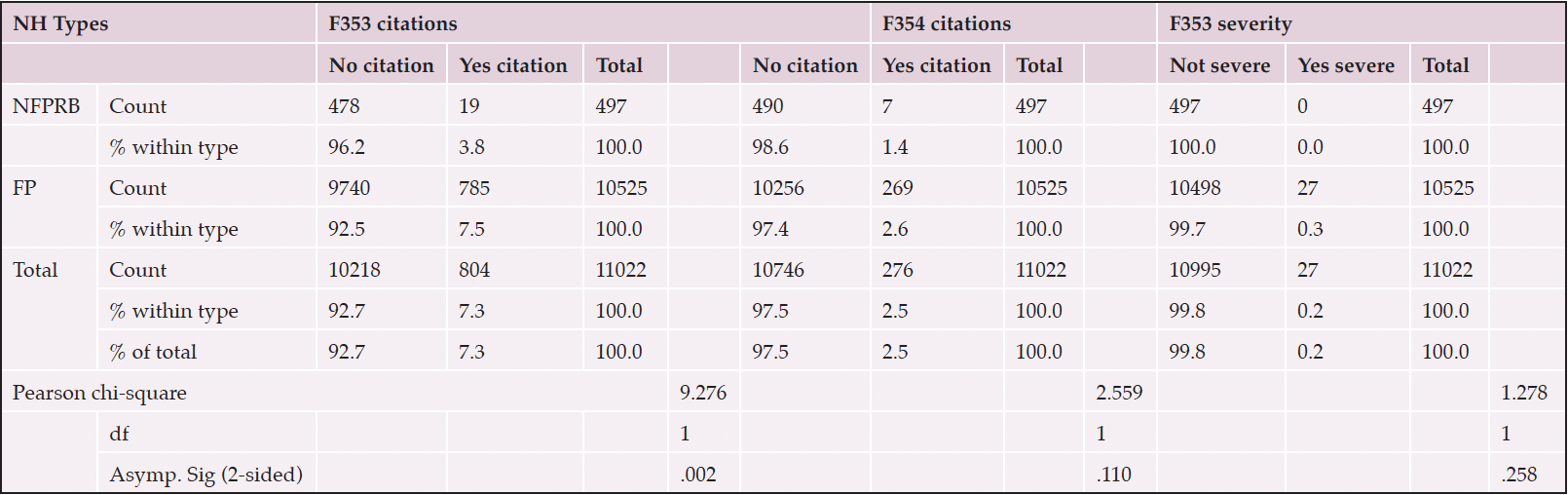
Table 5. Crosstab: Differences in F353/F354 Deficiency Counts and F353 Severity
Discussion
This study examined the differences in registered and licensed staffing levels, measured in terms of hours per resident day, and how these measures affected quality of care outcomes deficiencies, measured in terms of staffing-related deficiencies counts and severity in 11,022 for-profit and not-for-profit religious-based nursing homes in the United States. Findings revealed differences between these two types of nursing homes on staffing levels, showing that larger numbers of not-for-profit religious-based nursing homes had higher nurse staffing HPRD compared to the for-profit nursing homes. These results confirmed previous study findings that focused on staffing levels in FP NHs and the NFP NHs (7, 8, 28, 29, 30). Lower-staffed nursing homes were reported to be more likely for-profit nursing homes (20). This outcome is noteworthy for nursing homes policy makers, government agencies/inspectors, and the public. For-profit nursing homes constitute the largest category of homes and provide care services to many older adults in the United States. Ensuring optimal health outcomes for this population of nursing home residents requires all stakeholders’ vested interest and advocacy in nurse staffing levels that meet the expected care needs in nursing home.
In determining occurrences and comparing the association between nurse staffing levels and total counts and severity of staffing related deficiencies in the two nursing home categories, results showed a lack/reduced number of deficiencies and insignificant relationships with nurse staffing levels in the not-for-profit religious-based NHs. This confirms the perspective that not-for-profit NHs prioritized the well-being of NH residents over profit making than the FP NHs (25). Contrary outcome was found among the FP NHs; both nurse staffing levels were related to higher number counts and severity (F353) of deficiencies. Previous studies reported similar findings between staffing levels and deficiency citations/severity in for-profit NHs (7, 8, 17, 22, 25). It is educating to know that the results in this study showed that neither of the NH types had a record of F354 severe deficiencies; a positive outcome on the part of for-profit NHs. Although a study noted fewer deficiency citations in for-profit NHs (15), nursing homes stakeholders, including the public, policy makers, and families should emphasize the importance of prioritizing maintenance of older adults nursing home residents’ well-being over profit maximization as is the practice/focus of for-profit NHs.
Limitations
There are some limitations in this study. The cross-sectional methodology design was a limiting factor to the study compared to a longitudinal study. Although the source and the nature of data was considered to be reliable, accurate, and strong for external validity, the information was self-reported by nursing homes and could have undermined the objectiveness of the study outcomes. Use of survey and/or mixed methodologies approach might have provided an in-depth and non-biased study outcome. In addition, the inclusion of only the Medicare and Medicaid certified NHs and the large sample size difference between the two groups of NHs could have affected the study outcomes and generalizability of the results. Due to the lack of cases observation for RN/LN and F353 deficiency severity occurrences in the NFPRB NHs, no inference could be drawn. However, this supports the study outcome that there were no F353 severity in the NFPRB NHs. Lastly, findings from religious-based nursing homes cannot be generalized to non-religious-based nursing homes.
Conclusion and Implications
The population of older adults in the United States continues to grow at a rapid rate with many of them residing in Medicare and Medicaid certified nursing homes. Irrespective of their nursing home types, these vulnerable and frail nursing home older adult residents deserve quality and safe care services that are expected for the maintenance of their mental, social, and psychological well-being. Findings from this comparative study provides significant outcomes for all nursing homes’ stakeholders. The count and severity of staffing related quality deficiencies found to be more prevalent in for-profit nursing homes were evidence of residents’ poor quality of care and life outcomes. Sufficient and appropriate nurse staffing levels, registered and licensed nurses, are significant for prevention of quality deficiencies and adverse events among the older adults residing in nursing homes. Therefore, there is a need for ongoing efforts by nursing home policy makers, policy enforcers, healthcare practitioners, government agencies, insurers, and the public to ensure adequate nurse staffing levels.
Funding: The author received no funding for this study.
Acknowledgements: The author acknowledges the statistical analysis support provided by Drs. Peter Denner and Jesse Wheeler and assistance with data curation, data cleaning, and technical support provided by Jason Bosen and Dotun Ebiekuraju. Thanks to Dr. Hussey for her guidance and review of the main project that produced this study.
Declaration of Conflicting Interest: The author declared no potential conflicts of interest.
Ethical standards: This study was approved for implementation by the Idaho State University Human Subject Committee (Institutional Review Board). It was not subjected to review. The author used secondary and publicly published information that was accessed from the Center of Medicare and Medicaid Services’ websites. The CMS reports the staffing, quality of care outcomes, and health deficiency citation information mainly at the facility level without disclosing residents’ identifiers. There was no resident privacy and confidentiality issues that could have endangered, harmed, or disempowered the vulnerable older adult population in this study. The information did not require a user agreement and permission for access.
Open Access: This article is distributed under the terms of the Creative Commons Attribution 4.0 International License (http://creativecommons.org/licenses/by/4.0/), which permits use, duplication, adaptation, distribution and reproduction in any medium or format, as long as you give appropriate credit to the original author(s) and the source, provide a link to the Creative Commons license and indicate if changes were made.
References
1. Caplan Z, Rabe M. The older population: 2020 Census briefs. 2023. https://www.census.gov/library/publications/2023/decennial/c2020br-07.html. Accessed 20 February 2024.
2. Centers for Medicare & Medicaid Services. Nursing home quality initiative: Quality measures. n.d. https://www.cms.gov/Medicare/Quality-Initiatives-Patient-Assessment-instruments/NursingHomeQualityInits/NHQIQualityMeasures.html. Accessed 20 August 2017.
3. Cho E, Min D, Heo S-J, Lee K, Kim H. Effects of registered nurses’ staffing levels, work environment and education levels on nursing home residents’ quality of life and nurse outcomes. J Clin Nurs 2023;32(17/18): 6494-6503. doi: 10.1111/jocn.16689
4. Clemens S, Wodchis W, McGilton K, McGrail K, McMahon M. The relationship between quality and staffing in long-term care: A systematic review of the literature 2008-2020. Int J Nurs Studies 2021;122:104036. DOI: https://doi.org/10.1016/j.ijnurstu.2021.104036
5. Jutkowitz, E. et al. Effects of nurse staffing on resident outcomes in nursing homes: A systematic review. J Am Med Dir Assoc 2023;24(1):75-81.e11. doi: 10.1016/j.jamda.2022.11.002.
6. Omnibus Budget Reconciliation Act of 1987, 42 U.S.C. §§ 4201-4206 (2017).
7. Friedman L, Avila S, Friedman D, Meltzer W. Association between type of residence and clinical signs of neglect in older adults. Gerontology 2019;65(1):30-39. doi:10.1159/000492029
8. Harrington C, Olney B, Carrillo H, Kang T. Nurse staffing and deficiencies in the largest for-profit nursing home chains owned by private equity companies. Health Serv Res 2012;47(1):106-128. doi: 10.1111/j.1475-6773.2011.01311.x
9. Centers for Medicare & Medicaid Services. Design for care compare nursing home five-star quality rating system: Technical users’ guide. 2025. https://www.cms.gov/medicare/provider-enrollment-and-certification/certificationandcomplianc/downloads/usersguide.pdf. Accessed 5 August 2025
10. Centers for Medicare & Medicaid Services. Design for nursing home compare five-star quality rating system: Technical user’s guide. 2020. https://www.cms.gov/medicare/provider-enrollment-and-certification/certificationand complianc/download/usersguide.pdf. Accessed 23 September 2020.
11. Lerner NB, Johantgen M, Trinkoff AM, Storr CL, Han K. Are nursing home survey deficiencies higher in facilities with greater staff turnover. J of Am Med Dir Assoc 2014; 15(2):102-7. doi: 10.1016/j.jamda.2013.09.003
12. Matsudaira JD. Government regulation and the quality of healthcare: Evidence from minimum staffing legislation for nursing homes. J of Hum Resour 2014;49(1):32-72. doi: 10.3368/jhr.49.1.32
13. Bowblis JR. Staffing ratios and quality: An analysis of minimum direct care staffing requirements for nursing homes. Health Serv Res 2011;46(5):1495-1516. doi:10.1111/j.1475-6773.2011.01274.x
14. Towsley GL, Beck SL, Pepper GA. Predictors of quality in rural nursing homes using standard and novel methods. Res in Gerontol Nurs 2013;6(2):116-126. doi:10.3928/19404921-20130114-02
15. Wagner LM, McDonald SM, Castle NG. Nursing home deficiency citations for physical restraints and restrictive side rails. West J Nurs Res 2013;35(5):546-565. doi:10.1177/0193945912437382
16. Lerner NB. The relationship between nursing staff Levels, skill mix, and deficiencies in Maryland nursing homes. Health Care Manager 2013;32(2):123-128. doi:10.1097/HCM.0b013e31828ef5f9
17. McDonald SM, Wagner LM, Castle NG. Staffing-related deficiency citations in nursing homes. J Aging & Soc Policy 2013;25:83-97. doi: 10.1080/08959420.2012.705696
18. Harrington C, Dellefield ME, Halifax E, Fleming ML, Bakerjian D. (2020). Appropriate nurse staffing levels for U.S. nursing homes. Health Serv Insights 2020;13:1–14. doi: 10.1177/1178632920934785
19. Whitman DR, Maldonado R-W, Davlyatov GK. The relationship of registered nurse staffing and nursing home quality measure star ratings. Academy of Management Annual Meeting Proceedings 2022;2022(1):1-6. Accessed 13 May, 2025. https://doi.org/10.5465/AMBPP.2022.57
20. Abt Associates. Nursing home staffing study comprehensive report. Report prepared for the Center for Medicare and Medicaid Services. 2023. https://www.cms.gov/files/document/nursing-home-staffing-study-final-report-appendix-june-2023.pdf. Accessed 15 May 2025.
21. Shin JH. Nursing staff characteristics on resident outcomes in nursing homes. J Nurs Res 2019;27(1):1-9. doi:10.1097/jnr.0000000000000269
22. Chen MM, Grabowski DC. Intended and unintended consequences of minimum staffing standards for nursing homes. Health Econ 2015;24(7):882-839. doi: 10.1002/hec.3063
23. Harrington C, Chapman S, Halifax E, Dellefield ME, Montgomery A. Time to ensure sufficient nursing home staffing and eliminate inequities in care. J Gerontol Geriatr Med 2021;7: 099. doi:10.24966/GGM-8662/100099
24. Jacobs GA, Polito J. How faith-based nonprofit organizations define and measure organizational effectiveness. Int J Organization Theory and Behav 2012;15(1):29-56. http://pracademics.com/index.php/ijotb
25. Paul III DP, Godby T, Saldanha S, Valle J, Coustasse A. Quality of care and profitability in not-for-profit versus for-profit nursing homes. In: Sanchez J (ed) Proceedings of the Business and Health Administration Association Annual Conference. 2016. Chicago IL, pp. 90-97.
26. Abt Associates. Nursing home compare 5-star quality rating system: Year three report. 2013. https://www.cms.gov/Medicare/Provider-Enrollment-and-Certification/CertificationandComplianc/Downloads/FSQRS-Report.pdf. Accessed 25 October 2017.
27. Center for Medicare and Medicaid Services. Nursing home compare datasets. 2017. https://data.medicare.gov/data/nursing-home-compare. Accessed 25 October 2017.
28. Gichungeh I, Kim A. The mediating role of staffing on quality of care in nonprofit and for-profit nursing homes in Indiana. J Ind Academy Soc Sci 2015;18(1):88-102. http://digitalcommons.butler.edu/jiass/vol18/iss1/8
29. Hsu AT, Berta W, Coyte PC, Laporte A. Staffing in Ontario’s long-term care homes: Differences by profit status and chain ownership. Canadian J Aging 2016;35(2):175-189. doi: 10.1017/S071498081600092
30. Kang Y, Tzeng H, Miller NA. Facility characteristics and risk of developing pressure ulcers in the US nursing homes. J Nurs Care Qual 2016;31(1): E9-E16. doi: 10.1097/NCQ.0000000000000136.
The Author(s) 2025