
B.M. Jesdale1, Y. Yuan1, N.N. Nielsen1, K.L. Lapane1
1. Department of Population Health Sciences, University of Massachusetts Chan Medical School, Worcester. 55 Lake Avenue North, Worcester, MA, USA 01655.
Corresponding Author: Kate Lapane, PhD, UMass Chan Medical School, Albert Sherman Center Room 6-1083, 55 Lake Avenue North, Worcester, MA 01655,
Email: kate.lapane@umassmed.edu, Main Phone: (508) 856-8999, PQHS Fax: (508) 856-8993
Jour Nursing Home Res 2026;12:1-10
Published online February 5, 2026, http://dx.doi.org/10.14283/jnhrs.2026.1
Abstract
BACKGROUND: The U.S. Surgeon General recently put renewed focus on loneliness and isolation as fundamental determinants of health.
OBJECTIVE: To estimate the incidence of depression among established long-stay residents in relation to contextual isolation.
DESIGN: Retrospective cohort study.
SETTING: US nursing homes.
PARTICIPANTS: 490,523 residents who lived in the same home for at least one year between 2010 and 2019.
MEASUREMENTS: Using data from the Minimum Data Set 3.0, we identified residents who were newly diagnosed with depression. We assessed contextual isolation for each resident with regard to 31 socially salient characteristics relative to their co-residents.
RESULTS: The incidence proportion of diagnosed depression from 3-12 months was 21.3% among residents not contextually isolated, 21.0% among residents contextually isolated on a single characteristic, and 22.2% among residents contextually isolated on multiple characteristics. After adjustment for several potential effect modifiers (gender, age group, race/ethnicity, use of translation services), the 3-12 month incidence proportion was 8% higher among residents experiencing contextual isolation on multiple characteristics (95% confidence interval 6% to 10%).
CONCLUSION: Contextual isolation modestly increases the risk of newly diagnosed depression among long-stay residents after they have settled into the nursing home setting. Entry to a nursing home represents an opportunity to make new connections. Helping residents make novel connections may be particularly important for residents whose background or other socially salient characteristics leave them as outsiders to the mainstream of a given nursing home.
Key words: Nursing homes, depression, social isolation, Minimum Data Set.
Introduction
The Surgeon General’s recent report “Our Epidemic of Loneliness and Isolation” has put renewed focus on social isolation as a fundamental determinant of health (1), and its role as a modifiable target for reducing depression and its manifold effects. Social isolation and loneliness are prevalent in nursing homes (2, 3), and predict depression (4, 5, 6). Depression is common in the nursing home setting (4, 7). An incidence of 14% for diagnosed depression in the initial 90 days of a nursing home stay was found in a recent nationwide study (8), while prior studies of the incidence of depression have usually been limited to a single nursing home, with a range of annual incidence reported from 7% to 19% (9, 10, 11). Depression and social isolation together have a compounding adverse effect on nursing home residents’ quality of life (12, 13).
In this study, we build on a novel approach to examining social isolation in nursing homes that focuses on the potential for strong ties among residents due to shared socially meaningful characteristics (or their absence). Contextual isolation is defined as having a socially salient characteristic (such as race/ethnicity) that is shared with relatively few other residents in the same nursing home (14). A modest association between contextual isolation and diagnosed depression at one year after admission has been demonstrated (15). The objective of this study was to estimate the incidence of depression among established long-stay residents after they have settled into their new environment, from their first quarter of residence to their first annual assessment, in relation to contextual isolation. By focusing on contextual isolation and its potential for leading to a higher risk for developing depression, this research will bring into focus the possibility to identify residents who may be at risk for social isolation due to being contextually isolated; to the critical phase of transition to living in a nursing home as a meaningful time to coax and encourage relationship development; and to the role for nursing home staff and culture to promote and develop relationships that bridge across implicit dividing lines between residents (16).
Methods
Data Source
The Minimum Data Set 3.0 is a comprehensive resident assessment required of all residents in US nursing homes eligible to receive Medicare and/or Medicaid funding (17). Assessments are completed for all residents regardless of their insurance coverage within 14 days of admission, quarterly thereafter, or when there is a significant change in status resulting in a substantive modification to the resident’s care plan. At each anniversary, a full assessment of all variables is conducted, while a somewhat reduced set of items is collected at quarterly assessments. All resident characteristics (contextual isolation, incident depression, and covariates) were collected on or derived from Minimum Data Set assessments.
Study Population
To identify established long-stay residents without depression diagnosed at admission or recognized shortly after admission, we selected all 1,349,845 resident admission assessments between 10/1/2010 and 12/31/2019 matched to a second (quarterly or significant change in status) assessment 90 +/- 30 days after the admission assessment, and an annual (or significant change in status) assessment 365 days +/- 65 days after the admission assessment. (Figure 1) We restricted the sample to 624,470 residents who, at admission, were at least 40 years of age, not comatose, with no indicators of depression (depression diagnosis checkbox=no, no antidepressant medications, and PHQ-9 or PHQ-10-OV score between 0 and 9) at the admission or quarterly assessments to exclude residents admitted to the nursing home with depression that was not initially recognized. We applied this restriction due to the relatively high incidence of recognized depression in the first 3 months of a nursing home stay, in part due to the recognition of depression among residents not initially diagnosed at admission (8, 18). We hypothesized that the impact of contextual isolation on depression incidence would more likely be reflected after a resident’s social and interaction patterns were more settled than in the first 3 months of a nursing home stay. Supplemental Figure 1 describes the hypothesized causal relationships that guided the decision to measure the incidence of diagnosed depression from a baseline that starts after the admission assessment. We further restricted the sample to 490,579 residents who were not severely cognitively impaired and had all measures needed to calculate contextual isolation. Of these, 490,523 had non-missing data on depression diagnosis at their annual assessment, constituting the final analytical sample.
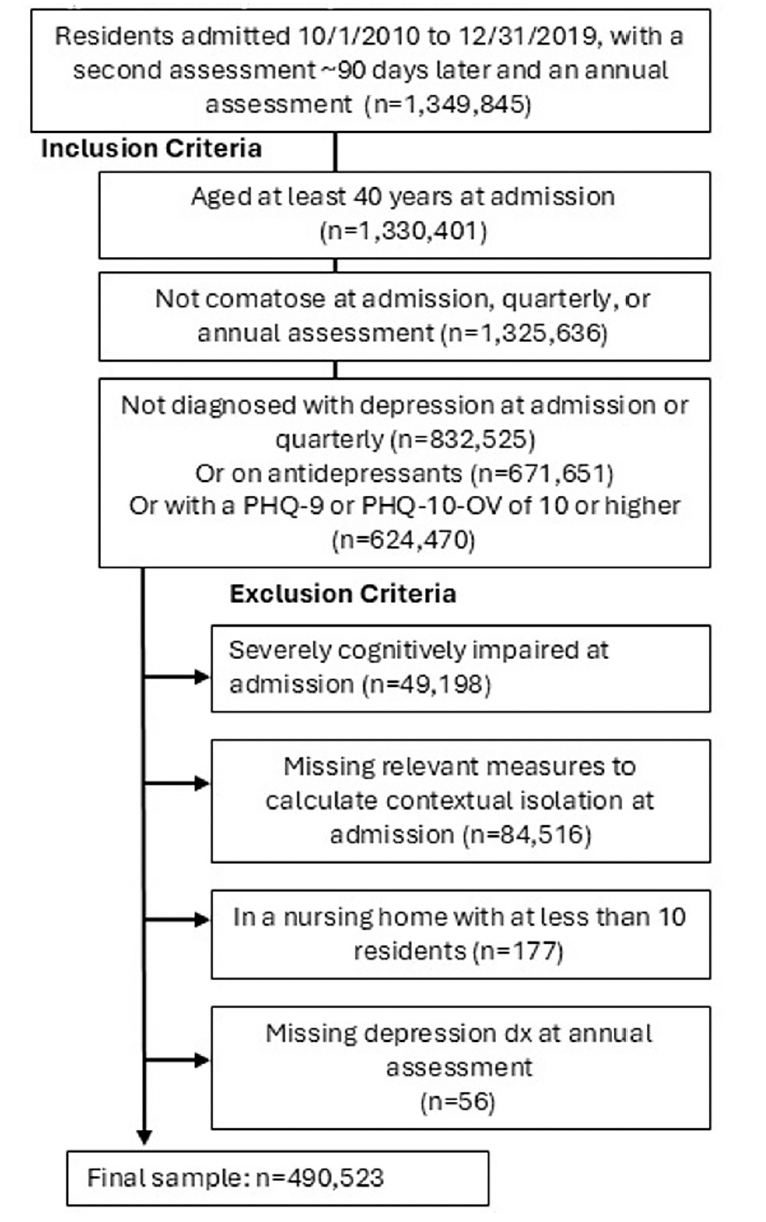
Figure 1. Study Sample Flowchart
Contextual Isolation
We defined nursing home contextual isolation as a resident-level status that reflects living in a setting where relatively few fellow residents share highly salient social characteristics with a resident. A wide range of potential characteristics that could serve as the basis for solidarity or shared interests between residents, and/or as a core component of social identity, from three domains: demographics, habits or activity preferences, and clinical conditions, were included. The measure of contextual isolation used 31 socially salient characteristics that were both endorsed by an expert panel consensus and readily measurable on Minimum Data Set assessments. These socially salient characteristics were young resident age (younger than 65), gender (male, female, transgender), race/ethnicity (Hispanic of any race(s), not Hispanic and White only, Black only, American Indian and Alaska Native only, Asian only, Pacific Islander only, or multiracial), marital status (married, widowed, divorced/separated/never married), whether the staff needs translation services to communicate, being large-bodied (body mass index of 30 or higher), tobacco use (yes, no), resident preference for participating in religious activities (yes, no), music (yes, no), interacting with pets/animals (yes, no), keeping up with the news (yes, no), or presence of a variety of clinical conditions: sensory impairment (hearing, vision, and/or speech clarity), visually stigmatizing condition (hemiplegia, paraplegia, quadriplegia, use of a limb prosthetic, amputation, and/or burns), stigmatized psychological condition (aphasia, cerebral palsy, multiple sclerosis, Huntington’s chorea, and/or Parkinson’s disease), dementia (Alzheimer’s and/or another dementia), stroke, cancer, HIV, or a physician-confirmed poor life prognosis (6 months or less). In the absence of a widely accepted proportion at which a minority population develops a sense of solidarity strong enough to counter discrimination they may face (19, 20, 21), we selected a cut-point of fewer than 20% of residents sharing that characteristic to determine whether the resident was contextually isolated or not with respect to that characteristic. To determine the proportion of residents sharing a socially salient characteristic at the time of the resident’s assessment, we included all residents with an assessment during the same calendar quarter as the target resident’s first annual assessment, regardless of how long they stayed in the nursing home or whether they were eligible for this analysis. To minimize missing data in this denominator describing the nursing home’s resident composition, we replaced missing values with the last known observation carried forward, so long as it was within 300 days (to capture the most recent full assessment-admission or annual-when available).
We further characterized contextual isolation into three mutually exclusive categories: not contextually isolated on any socially salient characteristic, contextually isolated on only one socially salient characteristic, and contextually isolated on multiple socially salient characteristics. This categorization allowed comparisons to previous research.
Incident Depression
We defined incident depression as having a diagnosis of depression indicated on the first annual assessment.
Covariates
We considered adjustment for potential effect modifiers used in construction of the contextual isolation measure: resident sex (male, female, transgender), age group (40-64, 65-74, 75-84, 85-94, or 95 years and older), race/ethnicity (Hispanic of any race(s), not Hispanic and White only, Black only, American Indian and Alaska Native only, Asian only, Pacific Islander only, or multiracial), marital status (married, widowed, divorced/separated/never married), and whether the resident wants or requests language translation services to communicate as potential effect modifiers. We considered further adjustment for factors that might have an extraneous influence on the incidence of depression, namely cognitive function, activities of daily living, Census division, calendar year, and quarter.
Analytic Strategy
We first described the distribution of the population with respect to contextual isolation (not contextually isolated, contextually isolated on one characteristic, or contextually isolated on multiple characteristics). Then, we described the 3 to 12 month incidence proportion of residents with a diagnosis of depression at their first anniversary assessment after having no diagnosis of depression, use of antidepressant medications, or more than mild depressive symptoms at their admission assessment or first quarterly assessment. We estimated incidence proportion ratios for depression among residents who were contextually isolated on one or more characteristics relative to residents not experiencing contextual isolation, using a Poisson model with a generalized estimating equation approach, treating nursing homes as repeated elements with an exchangeable correlation matrix. We adjusted all models for potential mediators of the influence of contextual isolation on depression incidence (age group, gender, race/ethnicity, marital status, and whether the resident’s care required translation services). Further adjustment for cognitive function, activities of daily living, Census division, year, or quarter of admission did not materially affect incidence proportion estimates, and were not included in the models presented. Finally, we performed nested models to estimate stratum-specific incidence proportion ratios for each gender, race/ethnicity, age group, marital status, whether the resident wanted or needed language translation services to communicate, and within cognitive function and activities of daily living strata.
Results
Of the 490,523 long-stay nursing home residents free of indicators of depression at admission and their first quarterly assessment (Figure 1), 54% were not contextually isolated on any of the socially salient characteristics we considered, 30% were contextually isolated on a single characteristic, and 15% were contextually isolated on at least two characteristics (Table 1). Male residents, the youngest residents, racial/ethnic minority residents, and residents wanting or needing language translation services to communicate with staff has higher prevalence of being contextually isolated.
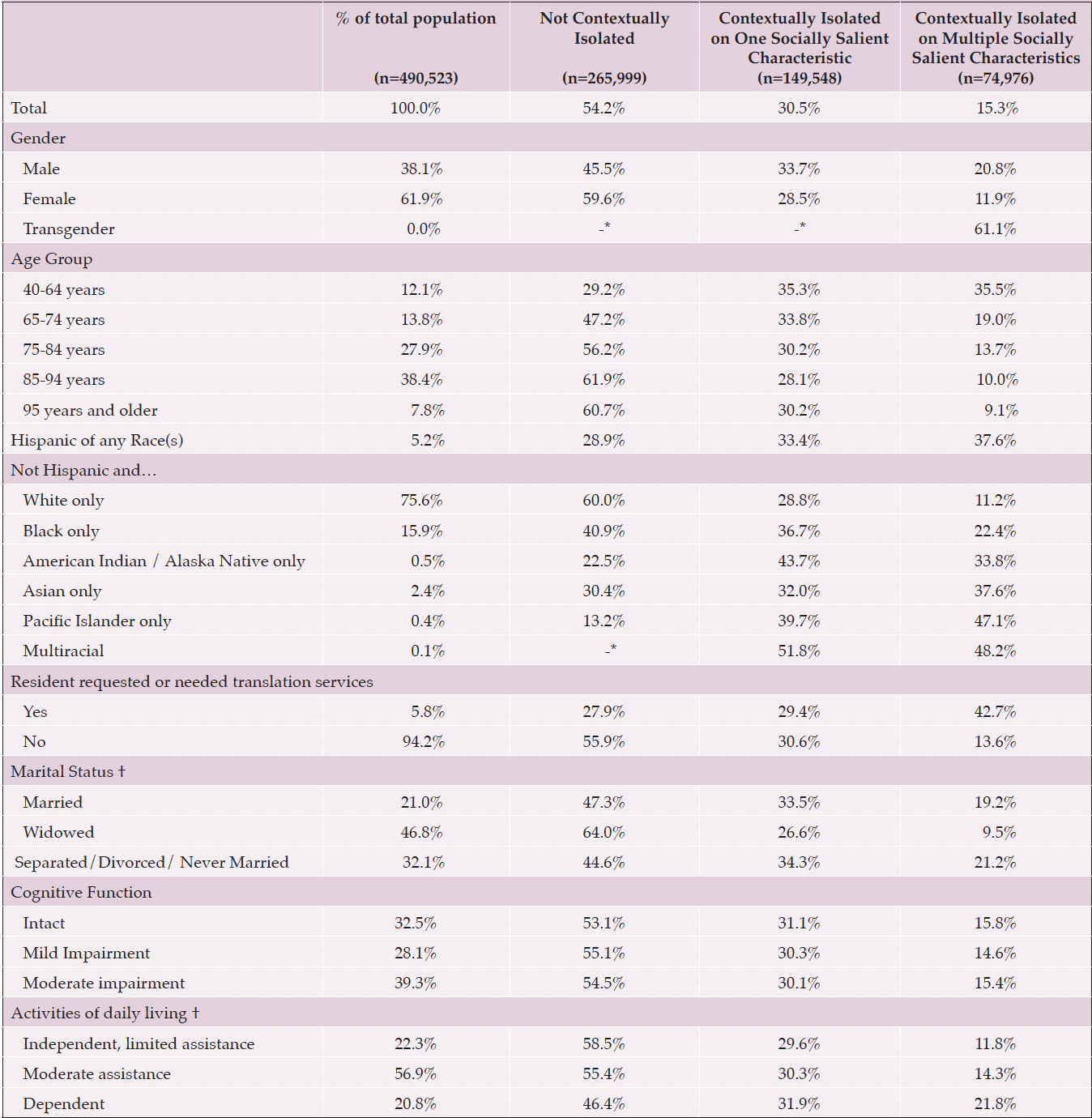
Table 1. Contextual Isolation among US Nursing Home Resident Sample, Overall and by Resident Characteristics
* Cells with a numerator of 10 or fewer residents suppressed. † 1,726 residents were missing marital status (0.4%), 135 were missing activities of daily living (0.0%).
The unadjusted 3 to 12 month incidence proportion of diagnosed depression was not markedly different between residents experiencing contextual isolation on one (21.0%) or multiple characteristics (22.2%) than from residents not experiencing contextual isolation (21.3%) (Table 2). The absolute difference between incidence proportion of depression in the most contextually isolated residents was within 5% of the cumulative incidence of depression from month 3 to 12 after nursing home admission in residents not experiencing contextual isolation for all strata examined, with the exception of American Indian/Alaska Native residents (19.6% vs. 10.6%), and Native Hawai′ian and Pacific Islander residents (17.9% vs. 13.2%).
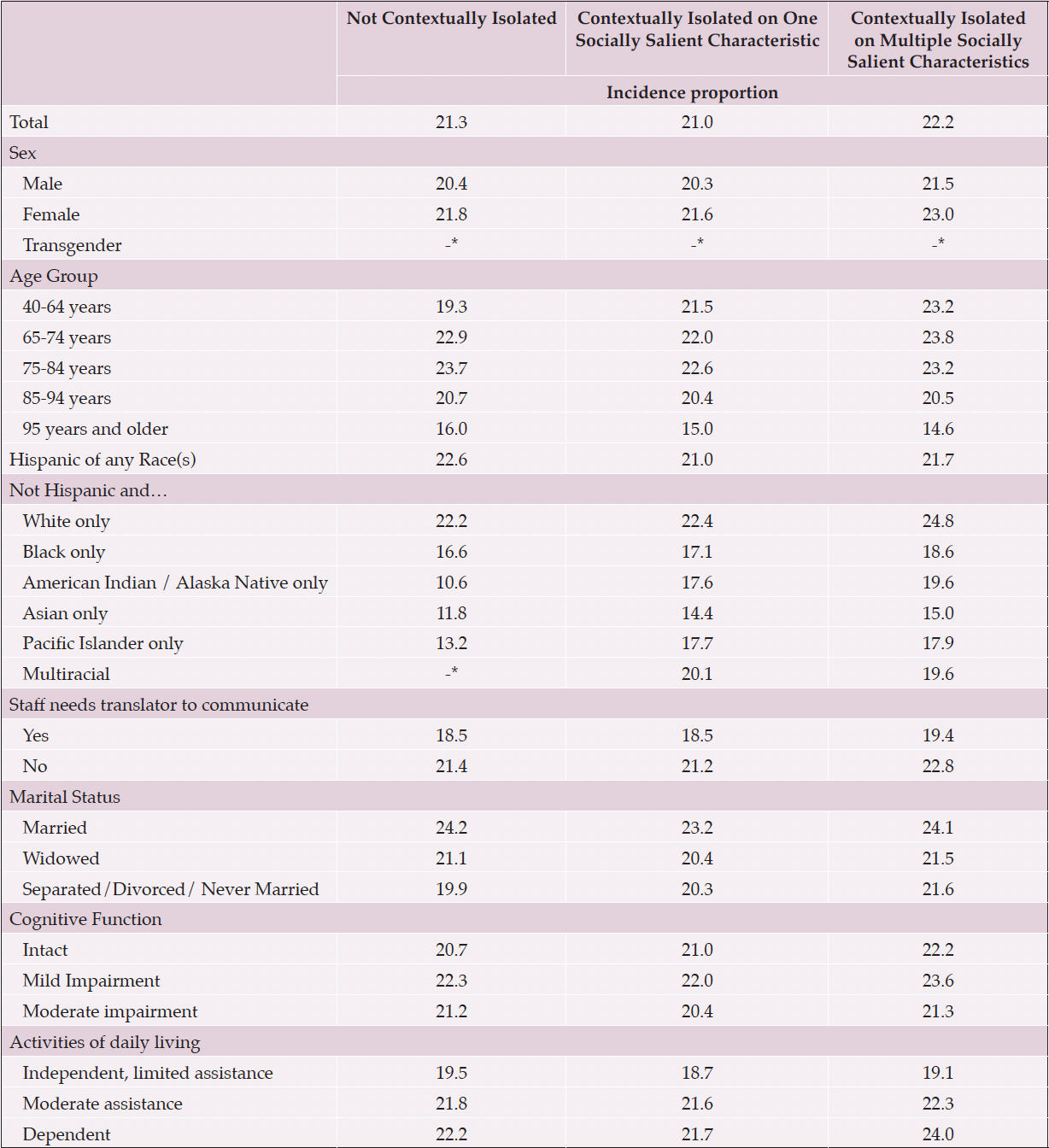
Table 2. Incidence Proportion of Depression (months 3-12 after nursing home admission) in Relation to Contextual Isolation, Overall and Stratified by Resident Characteristics
* Cells with a numerator of 10 or fewer residents suppressed.
However, after adjustment for age group, gender, race/ethnicity, and need for translation services, the incidence proportion of diagnosed depression from 3 to 12 months was 8% higher (95% confidence interval: 6% higher to 10% higher) among residents experiencing contextual isolation on multiple characteristics than among residents not experiencing contextual isolation (Table 3). In most subgroups, the incidence proportions for diagnosed depression were at least 5% higher for those experiencing contextual isolation on multiple characteristics compared to those not experiencing contextual isolation. Notable exceptions were among Hispanic residents, residents needing translation services to receive care, residents aged 95 years and older, never married residents, and residents with mild impairment of activities of daily living at admission.
Supplemental Tables A through C repeat these analyses after stratification for calendar year and quarter, and Census division. Findings within these strata were similar to those for the whole cohort. Supplemental Table D describes the 3 to 12 month incidence of depression experienced within groups of residents sharing each of the socially salient characteristics considered, and while there are stratum-specific differences, this is beyond the scope of the current analysis, and are included for the ambitious reader.
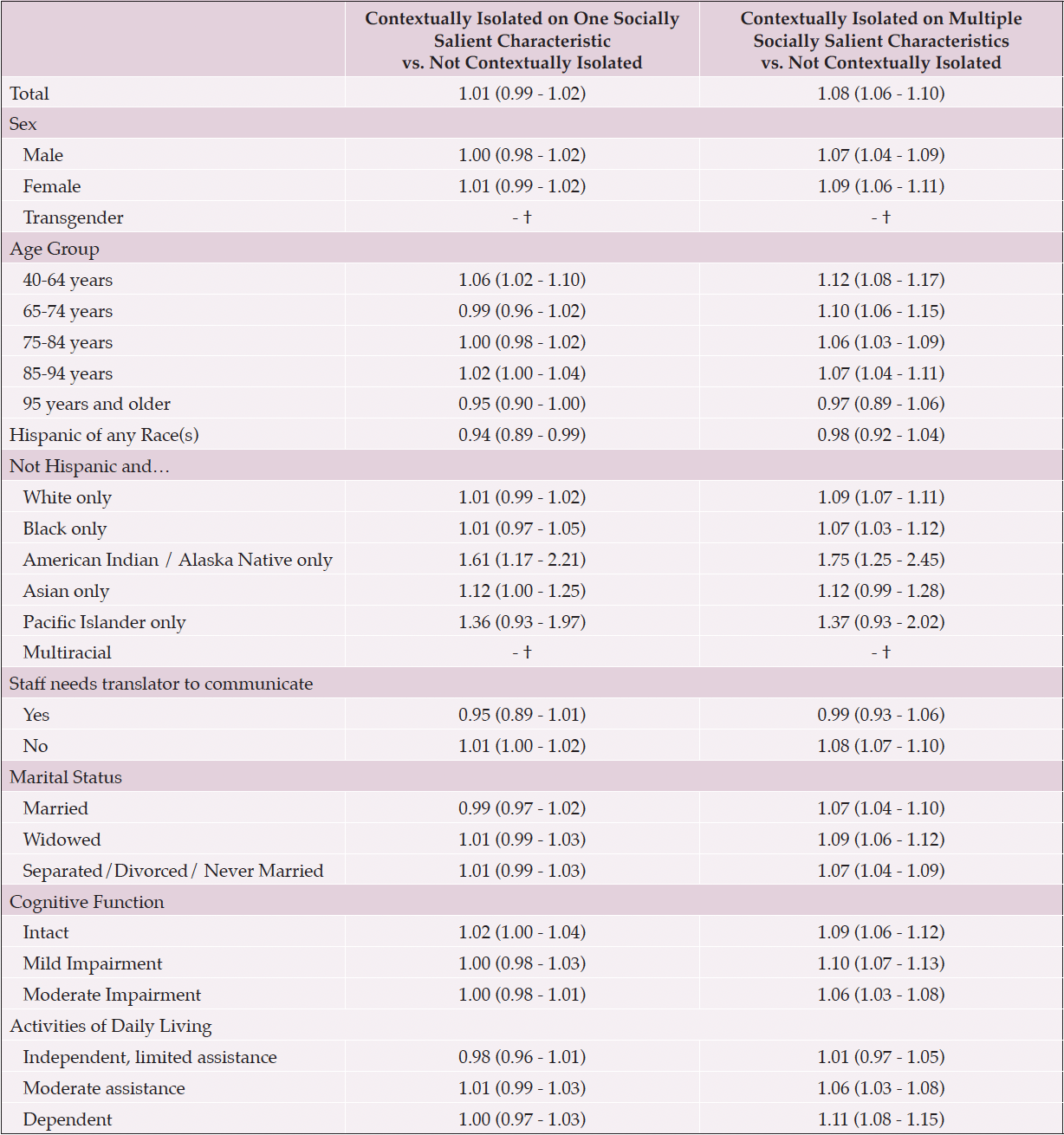
Table 3. Adjusted* Incidence Proportion Ratios for Depression, in Relation to Contextual Isolation, Overall, and Stratified by Resident Characteristic
* Adjusted for age group, gender, race/ethnicity, and need for translation services. Models included a generalized estimating equation approach to account for within-nursing home covariance. † Odds ratios based on one or more cells of 10 or fewer residents suppressed.
Discussion
Among newly admitted residents without diagnosed depression, or symptoms of depression, or use of antidepressants at or soon after admission, the 3 to 12 month incidence of diagnosed depression was 21.4% among all eligible residents. This 3 to 12 month incidence was 8% higher among residents experiencing contextual isolation on multiple characteristics than among residents not experiencing any contextual isolation, after adjustment for age group, gender, race/ethnicity, marital status, and need for translation services. In most demographic subgroups, the incidence was at least 5% higher in residents experiencing contextual isolation on multiple characteristics.
Overall, we found a 3 to 12 month incidence of diagnosed depression of 21.4%, and although this was over a shorter period, it was similar to the one-year incidence of depression found in a sample of 4,216 US nursing homes (21.6%) (18), but higher than the 6.4% in a single Maryland memory care nursing home (22), 14.9% in Norway (23), or 13.6% in the Netherlands (24). The incidence of newly diagnosed depression has been shown to be considerably higher in the first 3 months after admission (18), supporting our decision to restrict the observation of incident depression to the period after the first 3 months of residency. Yuan and colleagues also found a high incidence proportion (14%) of diagnosed depression in the first 3 months of a nursing home stay (8). Our findings suggest that the incidence of depression remains high regardless of contextual isolation, which indicates that other important factors contribute substantially to the onset of depression. The high incidence of depression occurred despite the federal mandate in the United States that requires nursing homes attend to the social needs of residents. That said, we suspect that nursing homes prioritize the medical and functional aspects of care.
While the transition to a nursing home is often associated with disruption of lifelong relationships (25), it may also provide an opportunity to reduce isolation, including for individuals previously living on their own. People entering nursing homes often experience a decline in social engagement in the years leading up to admission (26). A recent study showed that entering and settling into nursing home living was associated with increased social engagement, albeit the social gains experienced varied between sociodemographic groups (27, 28). Thus, admission to a nursing home, particularly for long-term care, is an apt time to consider social isolation and prevention of its sequelae, including depression. Residents often report that friendships within the nursing home are foundational to their sense of belonging (29, 30, 31, 32, 33, 34). Interventions to reduce social isolation and loneliness in older adults include a wide variety of options, many of which involve group activities and/or counseling for individuals at risk of, or already experiencing social isolation (35, 36, 37, 38).
Limitations
Prior research has documented that incidence of depression in the first year of a nursing home stay is comprised of a mixture of both truly incident depression and pre-existing depression recognized only after admission as staff, residents, and family advocates become better acquainted with one another (18). While our decision to exclude depression first recognized in the initial quarter of a nursing home stay likely reduces this potential bias, there may be residents not identified as depressed until after their first 3 months of a nursing home stay. While depression is underdiagnosed in nursing home residents (39), this becomes a particular concern in this analysis if the underdiagnosis of depression is substantially different among contextually isolated residents. It is plausible that the recognition of depression would be lower in residents who are outside the mainstream of the typical population for a given nursing home; however, this would tend to understate the incidence of depression in contextually isolated residents and is thus unlikely to be an explanation for the observed findings.
A resident’s status as contextually isolated is merely a statement about their characteristics in relation to those of their co-residents. It does not imply that all such residents feel isolated from the nursing home’s social life. Many resident-level and residence-level factors are likely to mitigate or enhance the potential effect of this contextual factor. While these have yet to be identified, we hypothesize that, for example, a socially salient characteristic shared with a roommate or neighbor may well be more of a source of solidarity than if the nearest resident sharing that characteristic lives in a different unit. Likewise, nursing home staff that cherish the variety of residents they encounter and seek to develop social connections between residents would likely mitigate the potential for adverse consequences of contextual isolation. On the other hand, there are many socially salient characteristics that are likely to be important to a given resident that are not readily measurable using MDS assessments, including such factors as political affiliation, prior work experience, having children, a passion for sports teams, interests in specific types of music, games and puzzles, or other forms of entertainment. Cognitive impairment is likely to mitigate the potential impact of contextual isolation, to the degree that cognitive impairment interferes with a resident’s ability to generate and sustain social relationships. We excluded residents with severe cognitive impairment for this reason, but moderate cognitive impairment might still blunt the effect of contextual isolation.
We have no information on the contextual isolation residents may have experienced in their communities before entering the nursing homes. We also do not know what the incidence of depression would have been if they were able to remain at home. To our knowledge, data do not exist to enable future exploration of the impact of the change in exposure to contextual isolation on depression onset. We also did not conduct a mixed-method study. Qualitative data, such as individual interviews, would have helped us better understand the components of perceived contextual isolation. Such information would provide more specific guidance for targeted interventions. Future qualitative research is needed.
Our focus on resident interactions ignores another important source of resident socialization – relationships with staff. While staff interactions contribute materially to the well-being of residents (33, 40, 41), these interactions are often curtailed by demands for high resident throughput and by compensation focused on meeting residents’ medical care needs over meeting their social, spiritual, and emotional needs.
Practice Implications
By identifying contextual isolation as a determinant of incident depression among established long-stay residents, who have had an opportunity to settle into the nursing home setting, we hope to provide support for some intuitive measures to improve resident care. For instance, while entry to a nursing home is often associated with significant social disruption (25), it also represents an opportunity to make new connections, especially for new residents coming from relatively isolated community settings. Helping residents make novel connections may be particularly important for residents whose background or mix of socially salient characteristics leaves them outsiders to the typical mainstream of a given nursing home. On a related note, setting a home-wide expectation that varied experiences are to be cherished, even revered, may help offset the insularity of socially dominant groups, perhaps leading to suspicion and ostracism. By promoting a “resident-centered” approach to assessing a resident’s social needs, we hope that recognition of the phenomenon of contextual isolation and its potential impacts will reduce the profound psychological and medical needs resulting from preventable depression.
Research Implications
We intentionally ended eligibility for this study in 2019 because we expect that social connection in nursing homes would be markedly different during the COVID-19 era. An analysis of contextual isolation that accounts for the impact of the COVID-19 pandemic and its aftermath would be worthy of independent investigation after setting a baseline in the pre-COVID era. Future analyses should identify the characteristics of nursing homes that best integrate contextually isolated residents into their social life, so that these approaches can be adopted by nursing homes less able to meet the social needs of these residents. Finally, examination of the construct of contextual isolation itself would be useful to identify which particular socially salient characteristics will have more influence than others. Another valuable inquiry would be to explore the influence of contextual isolation at different proportion cut-points. For instance, women in a minority of 10% or less experience little solidarity or ability to influence decisions in corporate settings, while at 30% (“critical mass”), they are able to influence agendas substantially (19). The percentages at which residents feel highly isolated vs. an integral part of a nursing home’s social life remain unexplored.
Conclusions
The incidence of depression was modestly increased in residents who were contextually isolated on multiple characteristics. Nursing homes should consider identifying residents at risk for social isolation and depression due to contextual isolation at admission; foster opportunities for residents to socialize across the social boundaries of race/ethnicity, language use, and marital status; and develop a culture of mutual reverence to build solidarity and social support among residents.
Authorship / CRediT authorship contribution statement: Bill M. Jesdale, Yiyang Yuan, Natalia N. Nielsen and Kate L. Lapane each contributed to the conceptualization of the analysis, and contributed to the interpretation and writing of manuscript, including the original drafting, review, and editing. Dr. Jesdale curated the data and conducted the formal analyses. Dr. Lapane acquired funding for the analysis and is the corresponding author.
Declaration of Conflicting Interest: The authors have no conflict of interest to declare with respect to this work.
Funding: This study was funded by a National Institutes of Health grant to Dr. Lapane (R01AG071692) and the National Centre for Advancing Translational Sciences to Dr. Lapane (TL1 TR001454). The sponsors had no role in the design and conduct of the study, in the collection, analysis, and interpretation of data, in the preparation of the manuscript, or in the review or approval of the manuscript.
Declaration of the use of generative AI and AI-assisted technologies in scientific writing and in figures, images and artwork: Artificial Intelligence played no role in the analysis of the data, the authors’ preparation or internal review of this manuscript.
Ethical standards: This research was approved by the University of Massachusetts T.H. Chan Medical School’s Institutional Review Board (H00022181).
Data statement: Data used in this analysis was provided by the Centers for Medicaid and Medicare Services under a data use agreement that prohibits further data sharing.
Acknowledgements: None.
Open Access: This article is distributed under the terms of the Creative Commons Attribution 4.0 International License (http://creativecommons.org/licenses/by/4.0/), which permits use, duplication, adaptation, distribution and reproduction in any medium or format, as long as you give appropriate credit to the original author(s) and the source, provide a link to the Creative Commons license and indicate if changes were made.
References
1. Murthy VH. Our Epidemic of Loneliness and Isolation: The U.S. Surgeon General’s Advisory on the Healing Effects of Social Connection and Community. 2023. Accessed January 20, 2025 from https://www.hhs.gov/sites/default/files/surgeon-general-social-connection-advisory.pdf
2. Lapane KL, Lim E, McPhillips E, Barooah A, Yuan Y, Dubé CE. Health effects of loneliness and social isolation in older adults living in congregate long term care settings: A systematic review of quantitative and qualitative evidence. Archiv Gerontol Geriatr 2022;102:104728. doi: 10.1016/j.archger.2022.104728
3. Boamah SA, Weldrick R, Lee T-SJ, Taylor N. Social isolation among older adults in long-term care: A scoping review. J Aging Health 2021;33(7-8):618-632. doi: 10.1177/08982643211004174
4. Wang Q, Huang X, Liu M, Wang C, Sun Z, Huang C, Tang S. Prevalence and risk factors of depression among elderly people in nursing homes from 2012 to 2022: A systematic review and meta-analysis. Aging Ment Health 2024;28(12):1569-1580. doi: 10.1080/13607863.2024.2367044
5. Jaremka LM, Fagundes CP, Glaser R, Bennett JM, Malarkey WB, Kiecolt-Glaser JK. Loneliness predicts pain, depression, and fatigue: Understanding the role of immune dysregulation. Psychoneuroendocrinology 2013;38(8):1310-7. doi: 10.1016/j.psyneuen.2012.11.016
6. Santini ZI, Jose PE, York Cornwell E, Koyanagi A, Nielsen L, Hinrichsen C, Meilstrup C, Madsen KR, Koushede V. Social disconnectedness, perceived isolation, and symptoms of depression and anxiety among older Americans (NSHAP): A longitudinal mediation analysis. Lancet Public Health 2020;5(1):e62-e70. doi: 10.1016/S2468-2667(19)30230-0
7. Levin CA, Wei W, Akincigil A, Lucas JA, Bilder S, Crystal S. Prevalence and treatment of diagnosed depression among elderly nursing home residents in Ohio. J Am Med Dir Assoc 2007;8(9):585-94. doi: 10.1016/j.jamda.2007.07.010
8. Yuan Y, Lapane KL, Baek J, Jesdale BM, Ulbricht CM. Nursing home star ratings and new onset of depression in long-stay nursing home residents. J Am Med Dir Assoc 2019;20(10):1335-1339.e10. doi: 10.1016/j.jamda.2019.05.004
9. Rozzini R, Boffelli S, Franzoni S, Frisoni GB, Trarucchi M. Prevalence and predictors of depressive symptoms in a nursing home. Geriatr Pssychiatr 1996;11:629-634. doi: 10.1002/(SICI)1099-1166(199607)11:7<629::AID-GPS360>3.0.CO;2-X
10. Parmelee PA, Katz IR, Lawton MP. Incidence of depression in long-term care settings. J Gerontol. 1992;47(6):M189-M196. doi:10.1093/geronj/47.6.m189
11. Foster JR, Cataldo JK, Boskay IJE. Incidence of depression in a medical long-term care facility: Findings from a restricted sample of new admissions. Geriatr Psychiatr 1991;6:13-20. doi: 10.1002/gps.930060104
12. Unsar S, Sut N. Depression and health status in elderly hospitalized patients with chronic illness. Arch Gerontol Geriatr. 2010;50(1):6-10. doi:10.1016/j.archger.2008.12.011
13. Cacioppo JT, Hughes ME, Waite LJ, Hawkley LC, Thisted RA. Loneliness as a specific risk factor for depressive symptoms: cross-sectional and longitudinal analyses. Psychol Aging. 2006;21(1):140-151. doi:10.1037/0882-7974.21.1.140
14. Jesdale BM, Bova CA, Mbrah AK, Lapane KL. Group activity participation in relation to contextual isolation of United States nursing home residents living with Alzheimer’s Disease and related dementias. J Nurs Home Res 2021;7:38-46. doi:10.14283/jnhrs.2021.7
15. Jesdale BM, Yuan Y, Nielsen NN, Lapane KL. Prevalent depression in relation to contextual isolation among nursing home residents in the United States. J of Applied Gerontology; 2025: published online before print. doi: 10.1177/07334648251411585
16. Plummer DL. Racing across the Lines: Changing Race Relations through Friendships. 2004. The Pilgrim Press.
17. Centers for Medicare & Medicaid Services. Long-Term Care Facility Resident Assessment Instrument 3.0 User’s Manual, Version 1.14. 2016. Accessed January 3, 2025 from downloads.cms.gov/files/mds-30-rai-manual-v114-october-2016.pdf
18. Hoover DR, Siegel M, Lucas J, Kalay E, Gaboda D, Devanand DP, Crystal S. Depression in the first year of stay for elderly long-term nursing home residents in the U.S.A. Int Psychogeriatr 2010;22(7):1161-1171. doi: 10.1017/S1041610210000578
19. Kanter RM. Men and Women of the Corporation. 1977. Basic Books. New York.
20. Chan NKM, Jasso F. From inter-racial solidarity to action: Minority linked fate and African American, Latina/o, and Asian American political participation. Polit Behav 2021;45:1097-1119. doi: 10.1007/s11109-021-09750-6
21. Cikara M, Fouka V, Tabellini. Hate crime towards minoritized groups increases as the increase in sized-based rank. Nature Hum Behav 2022;6:1537-1544. doi: 10.1038/s41562-022-01416-5
22. Payne JL, Sheppard JME, Steinberg M, Warren A, Baker A, Steele C, Brandt J, Lyketsos CG. Incidence, prevalence, and outcomes of depression in residents of a long-term care facility with dementia. Int J Geriatr Psychiatr 2002;17(3):247-53. doi: 10.1002/gps.589
23. Barca ML, Selbæk G, Laks J, Engedal K. Factors associated with depression in Norwegian nursing homes. Int J Geriatr Psychiatry. 2009;24(4):417-425. doi:10.1002/gps.2139
24. Boorsma M, Joling K, Dussel M, et al. The incidence of depression and its risk factors in Dutch nursing homes and residential care homes. Am J Geriatr Psychiatry. 2012;20(11):932-942. doi:10.1097/JGP.0b013e31825d08ac
25. Knight T, Mellor D. Social inclusion of older adults in care: Is it just a question of providing activities? Int J Qual Stud Health Well-being 2007;2(2):76-85. doi: 10.1080/17482620701320802
26. Lam K, Cenzer I, Ankuda CK, et al. Social participation among older adults before and after long-term care facility entry. JAMA Intern Med. 2025;185(10):1257–1265. doi:10.1001/jamainternmed.2025.3684
27. Lapane KL, Lim E, Mack DS, Hargraves JL, Cosenza C, Dubé CE. Rising to the occasion: A national nursing home study documenting attempts to address social isolation during the COVID-19 pandemic. J Am Med Dir Assoc. 2023;24(8):1127-1132.e6. doi:10.1016/j.jamda.2023.05.018
28. Li Y, Cai X. Racial and ethnic disparities in social engagement among US nursing home residents. Med Care. 2014;52(4):314-321. doi:10.1097/MLR.0000000000000088
29. Bitzan JE, Kruzich JM. Interpersonal relationships of nursing home residents. Gerontologist 1990;30(3):385-390. doi: 10.1093/geront/30.3.385
30. Casey AS, Low L-F, Jeon Y-H, Brodaty H. Residents’ positive and negative relationship networks in a nursing home. J Gerontological Nurs 2016;42(11):9-13. doi: 10.3928/00989134-20160901-06
31. Haynes PPN. The relationship between the friendships of nursing home residents and their morale. J Negro Educ 1991;60(3):459-466. doi: 10.2307/2295497
32. Hsu H-C, Tung H-J. What makes you good and happy? Effects of internal and external resources to adaptation and psychological well-being for the disabled elderly in Taiwan. Aging Ment Health 2010;14(7):851-860. doi: 10.1080/13607861003800997
33. McCabe M, Byers J, Busija L, Mellor D, Bennett M, Beattie E. How important are choice, autonomy, and relationships in predicting the quality of life of nursing home residents? J Appl Gerontol 2021;40(120:1743-1750. doi: 10.1177/0733464820983972
34. Retsinas J, Garrity P. Nursing home friendships. Gerontologist 1985;25(4):376-381. doi: 10.1093/geront/25.4.376
35. Cattan M, White M, Bond J, Learmouth A. Preventing social isolation and loneliness among older people: A systematic review of health promotion interventions. Aging Soc 2005;25(1):41-67. doi: 10.1017/S0144686X04002594
36. Dickens AP, Richards SH, Greaves CJ, Campbell JL. Interventions targeting social isolation in older people: A systematic review. BMC Public Health 2011;11:647. doi: 10.1186/1471-2458-11-647
37. Franck L, Molyneux N, Parkinson L. Systematic review of interventions addressing social isolation and depression in aged care clients. Qual Life Res 2016;25:1395-1407. doi: 10.1007/s11136-015-1197-y
38. Masi CM, Chen H-Y, Hawkley LC, Cacioppo JT. A meta-analysis of interventions to reduce loneliness. Pers Soc Psychol Rev 2011;15(3):219-266. doi: 10.1177/1088868310377394
39. Simmons SF, Cadogan MP, Canrera GR, Al-Samarrai NR, Jorge JS, Levy-Storms L, Osterweil D, Schnelle JF. The Minimum Data Set depression quality indicator: Does it reflect differences in care processes? Geronotologist 2004;44(4):554-564. doi: 10.1093/geront/44.4.554
40. Lee KH, Boltz M, Lee H, Algase DL. Does social interaction matter psychological well-being in persons with dementia? Am J Alzheimers Dis Other Demen 2017;32(4):207-212. doi: 10.1177/1533317517704301
41. Willemse BM, Downs M, Arnold L, Smit D, de Lange J, Pot AM. Staff-resident interactions in long-term care for people with dementia: The role of meeting psychological needs in achieving residents’ well-being. Aging Ment Health 2015 19(5):444-452. doi: 10.1080/13607863.2014.944088
The Author(s) 2026